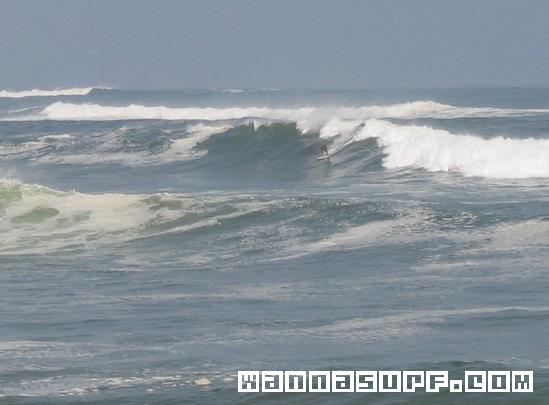
Pico Alto Surf Spot Guide, Peru
Pico Alto stands as one of South America's most formidable waves, a heavy reef break south of Lima that unleashes fast, hollow rights and occasional lefts over a rocky bottom with sandy patches. This thick peak draws from deep water, offering rides that grow longer and more powerful as faces exceed 10 meters, creating a raw, Hawaiian-style challenge visible right from the highway. For surfers chasing elite heavy water, its remote paddle-out and punishing power deliver an unmatched thrill in Peru's Punta Hermosa district.
Geography and Nature
Nestled in the Punta Hermosa area along Peru's central coast, Pico Alto sits about 43 kilometers south of Lima on the Panamerican Highway, in a classic surf zone framed by arid cliffs and open ocean exposure. The spot features a rocky shoreline with flat rock reefs extending offshore, backed by a rugged coastal landscape typical of the region's desert-like terrain. Access unfolds from roadside parking overlooking the break, where the deep-water setup creates massive peaks amid a relatively undeveloped, windswept setting.
Surf Setup
Pico Alto fires as a reef break over flat rocks, primarily delivering a long right wall with a workable left option, forming hollow, fast, and powerful waves that favor southwest swells while also handling northwest, west, and south directions. Offshore winds blow from the east, northeast, southeast, or south, with glassy conditions ideal for clean faces starting at triple overhead and holding beyond 12 meters. All tides work consistently due to stable water depth over the reef, keeping the wave shape reliable. In a typical session, expect an exhausting kilometer paddle-out to score extended rides on massive, rarely closing walls that demand precision and power.
Consistency and Best Time
This break shines with south and southwest swells common in winter, firing most consistently from April to August, when huge pulses deliver the size and power needed, though it can work year-round with the right conditions. April to June marks the peak for optimal sessions, extending into the broader winter period, while avoiding summer months reduces chances of firing due to smaller, less powerful swells. Check forecasts closely, as it breaks sometimes but rewards patience with epic days.
Crowd Levels
Pico Alto remains empty on weekdays and weekends alike, thanks to its heavy nature and long paddle. A mix of dedicated locals and visiting big-wave surfers populates sessions when it turns on, fostering a sense of classic camaraderie.
Who It's For
Pico Alto suits pros and advanced surfers only, with its fast, hollow power and massive sizes requiring expert paddling, hold-down tolerance, and big-wave guns. Beginners and intermediates should steer clear, as the reef bottom and extreme conditions offer no forgiving waves. Advanced riders can expect career-defining tubes and walls on swell days, pushing skills to the limit.
Hazards to Respect
Watch for powerful rips, sharp rocks on the reef, and intense two-wave hold-downs in the huge surf. Approach with solid ocean knowledge and never surf solo.
Water Temperature and Wetsuit Guide
Summer from June to October brings water temperatures of 16 to 18 degrees Celsius, calling for a 3/2 fullsuit to handle the chill from the Humboldt Current. Winter from December to March warms slightly to 18 to 21 degrees Celsius, where a 3/2 shorty or springsuit suffices on most days. Spring and fall hover around 17 to 20 degrees Celsius, recommending a 3/2 fullsuit for comfort during longer sessions.
How to Get There
Fly into Lima's Jorge Chávez International Airport (LIM), roughly 50 kilometers north, then head south on the Panamerican Highway for about 43 kilometers to the Punta Hermosa turnoff—expect a one-hour drive. Park easily along the highway shoulder with direct views of the break, then gear up for the kilometer paddle; no walking required. Public buses run frequently from Lima districts like Miraflores to Punta Hermosa village, dropping near access points for a budget-friendly option.

Pico Alto Surf Spot Guide, Peru
Pico Alto stands as one of South America's most formidable waves, a heavy reef break south of Lima that unleashes fast, hollow rights and occasional lefts over a rocky bottom with sandy patches. This thick peak draws from deep water, offering rides that grow longer and more powerful as faces exceed 10 meters, creating a raw, Hawaiian-style challenge visible right from the highway. For surfers chasing elite heavy water, its remote paddle-out and punishing power deliver an unmatched thrill in Peru's Punta Hermosa district.
Geography and Nature
Nestled in the Punta Hermosa area along Peru's central coast, Pico Alto sits about 43 kilometers south of Lima on the Panamerican Highway, in a classic surf zone framed by arid cliffs and open ocean exposure. The spot features a rocky shoreline with flat rock reefs extending offshore, backed by a rugged coastal landscape typical of the region's desert-like terrain. Access unfolds from roadside parking overlooking the break, where the deep-water setup creates massive peaks amid a relatively undeveloped, windswept setting.
Surf Setup
Pico Alto fires as a reef break over flat rocks, primarily delivering a long right wall with a workable left option, forming hollow, fast, and powerful waves that favor southwest swells while also handling northwest, west, and south directions. Offshore winds blow from the east, northeast, southeast, or south, with glassy conditions ideal for clean faces starting at triple overhead and holding beyond 12 meters. All tides work consistently due to stable water depth over the reef, keeping the wave shape reliable. In a typical session, expect an exhausting kilometer paddle-out to score extended rides on massive, rarely closing walls that demand precision and power.
Consistency and Best Time
This break shines with south and southwest swells common in winter, firing most consistently from April to August, when huge pulses deliver the size and power needed, though it can work year-round with the right conditions. April to June marks the peak for optimal sessions, extending into the broader winter period, while avoiding summer months reduces chances of firing due to smaller, less powerful swells. Check forecasts closely, as it breaks sometimes but rewards patience with epic days.
Crowd Levels
Pico Alto remains empty on weekdays and weekends alike, thanks to its heavy nature and long paddle. A mix of dedicated locals and visiting big-wave surfers populates sessions when it turns on, fostering a sense of classic camaraderie.
Who It's For
Pico Alto suits pros and advanced surfers only, with its fast, hollow power and massive sizes requiring expert paddling, hold-down tolerance, and big-wave guns. Beginners and intermediates should steer clear, as the reef bottom and extreme conditions offer no forgiving waves. Advanced riders can expect career-defining tubes and walls on swell days, pushing skills to the limit.
Hazards to Respect
Watch for powerful rips, sharp rocks on the reef, and intense two-wave hold-downs in the huge surf. Approach with solid ocean knowledge and never surf solo.
Water Temperature and Wetsuit Guide
Summer from June to October brings water temperatures of 16 to 18 degrees Celsius, calling for a 3/2 fullsuit to handle the chill from the Humboldt Current. Winter from December to March warms slightly to 18 to 21 degrees Celsius, where a 3/2 shorty or springsuit suffices on most days. Spring and fall hover around 17 to 20 degrees Celsius, recommending a 3/2 fullsuit for comfort during longer sessions.
How to Get There
Fly into Lima's Jorge Chávez International Airport (LIM), roughly 50 kilometers north, then head south on the Panamerican Highway for about 43 kilometers to the Punta Hermosa turnoff—expect a one-hour drive. Park easily along the highway shoulder with direct views of the break, then gear up for the kilometer paddle; no walking required. Public buses run frequently from Lima districts like Miraflores to Punta Hermosa village, dropping near access points for a budget-friendly option.


Il link alle previsioni non è disponibile.