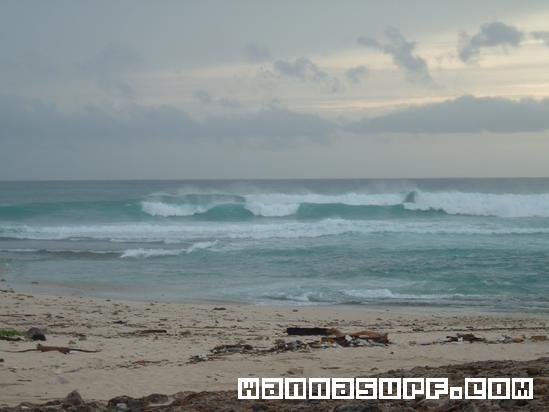
Rincon Surf Spot Guide, Aruba
Rincon in Aruba delivers powerful reef-coral waves that break both left and right, offering fast, punchy barrels and long walls for experienced surfers seeking consistent Caribbean swell. The spot sits on a dramatic coastline where sharp reef and rocky bottom demand respect and skill, creating the kind of challenging setup that rewards surfers who know what they're doing. This is not a beginner's playground, but rather a serious reef break that fires regularly throughout the year.
Geography and Nature
Rincon is located on the southern coast of Aruba in the San Nicolas area, stretching approximately 1.5 kilometers along the shoreline. The beach features white sand mixed with rocky outcrops and shallow reef formations that extend into the lineup. The surrounding landscape is relatively arid and undeveloped compared to other Caribbean destinations, giving the area a raw, authentic feel. The reef-coral bottom creates the foundation for quality waves while also defining the character of this exposed break.
Surf Setup
Rincon works best with north, northwest, and northeast swell directions, which wrap around the island and hit the reef with consistent power. The ideal wind direction comes from the southwest or south, creating offshore conditions that groom the faces and hold up the barrels. Mid to high tide stages produce the best shape and most rideable sections, though the break can work across different tidal windows. On a typical session, you'll find fast-moving waves with hollow sections and powerful shoulders that peel across the reef, demanding precise positioning and committed takeoffs.
Consistency and Best Time
This reef break receives regular swell year-round, making it one of Aruba's most reliable spots. Winter months from December through March bring the most consistent and largest swells, though quality waves appear throughout the year. Summer conditions can be smaller and less frequent, but the break rarely goes completely flat. The spot maintains good consistency because of its exposure to multiple swell directions and the reef's ability to organize oceanic energy into rideable peaks.
Crowd Levels
Rincon remains relatively empty on both weekdays and weekends, offering plenty of space to find your own waves. The local surfing community is respectful and welcoming to visiting surfers, creating a relaxed atmosphere despite the serious nature of the break.
Who It's For
Rincon is designed for experienced and advanced surfers who understand reef dynamics and can handle powerful, fast-moving waves. Intermediate surfers with solid wave knowledge and comfort in challenging conditions may find sections to practice, but the sharp bottom and speed of the break demand experience. Beginners should look elsewhere, as the reef hazards and wave intensity make this spot unsuitable for learning fundamentals.
Hazards to Respect
The sharp coral and rocky reef bottom presents the primary hazard, capable of causing serious cuts and lacerations. Sea urchins inhabit the reef in various locations, so reef shoes are essential. Rip currents can form depending on swell size and tide stage, requiring knowledge of how to escape them safely.
Water Temperature and Wetsuit Guide
Summer temperatures from June to October range between 26 and 28 degrees Celsius, requiring boardshorts or a thin summer wetsuit for UV protection. Winter months from December to March stay warm at 25 to 27 degrees Celsius, with boardshorts remaining the standard choice. Spring and fall maintain similar warmth between 26 and 27 degrees Celsius, making minimal wetsuit coverage appropriate year-round.
How to Get There
The nearest airport is Queen Beatrix International Airport in Oranjestad, approximately 35 kilometers away. A rental car is the most practical option for reaching Rincon, with the drive taking roughly 45 minutes to one hour depending on traffic. Parking is available near the beach with free parking lots in the area. The beach itself is easily accessible by foot once parked, with no significant walking distance required to reach the lineup.

Rincon Surf Spot Guide, Aruba
Rincon in Aruba delivers powerful reef-coral waves that break both left and right, offering fast, punchy barrels and long walls for experienced surfers seeking consistent Caribbean swell. The spot sits on a dramatic coastline where sharp reef and rocky bottom demand respect and skill, creating the kind of challenging setup that rewards surfers who know what they're doing. This is not a beginner's playground, but rather a serious reef break that fires regularly throughout the year.
Geography and Nature
Rincon is located on the southern coast of Aruba in the San Nicolas area, stretching approximately 1.5 kilometers along the shoreline. The beach features white sand mixed with rocky outcrops and shallow reef formations that extend into the lineup. The surrounding landscape is relatively arid and undeveloped compared to other Caribbean destinations, giving the area a raw, authentic feel. The reef-coral bottom creates the foundation for quality waves while also defining the character of this exposed break.
Surf Setup
Rincon works best with north, northwest, and northeast swell directions, which wrap around the island and hit the reef with consistent power. The ideal wind direction comes from the southwest or south, creating offshore conditions that groom the faces and hold up the barrels. Mid to high tide stages produce the best shape and most rideable sections, though the break can work across different tidal windows. On a typical session, you'll find fast-moving waves with hollow sections and powerful shoulders that peel across the reef, demanding precise positioning and committed takeoffs.
Consistency and Best Time
This reef break receives regular swell year-round, making it one of Aruba's most reliable spots. Winter months from December through March bring the most consistent and largest swells, though quality waves appear throughout the year. Summer conditions can be smaller and less frequent, but the break rarely goes completely flat. The spot maintains good consistency because of its exposure to multiple swell directions and the reef's ability to organize oceanic energy into rideable peaks.
Crowd Levels
Rincon remains relatively empty on both weekdays and weekends, offering plenty of space to find your own waves. The local surfing community is respectful and welcoming to visiting surfers, creating a relaxed atmosphere despite the serious nature of the break.
Who It's For
Rincon is designed for experienced and advanced surfers who understand reef dynamics and can handle powerful, fast-moving waves. Intermediate surfers with solid wave knowledge and comfort in challenging conditions may find sections to practice, but the sharp bottom and speed of the break demand experience. Beginners should look elsewhere, as the reef hazards and wave intensity make this spot unsuitable for learning fundamentals.
Hazards to Respect
The sharp coral and rocky reef bottom presents the primary hazard, capable of causing serious cuts and lacerations. Sea urchins inhabit the reef in various locations, so reef shoes are essential. Rip currents can form depending on swell size and tide stage, requiring knowledge of how to escape them safely.
Water Temperature and Wetsuit Guide
Summer temperatures from June to October range between 26 and 28 degrees Celsius, requiring boardshorts or a thin summer wetsuit for UV protection. Winter months from December to March stay warm at 25 to 27 degrees Celsius, with boardshorts remaining the standard choice. Spring and fall maintain similar warmth between 26 and 27 degrees Celsius, making minimal wetsuit coverage appropriate year-round.
How to Get There
The nearest airport is Queen Beatrix International Airport in Oranjestad, approximately 35 kilometers away. A rental car is the most practical option for reaching Rincon, with the drive taking roughly 45 minutes to one hour depending on traffic. Parking is available near the beach with free parking lots in the area. The beach itself is easily accessible by foot once parked, with no significant walking distance required to reach the lineup.


Il link alle previsioni non è disponibile.
Webcam not available